Commercial flat roof maintenance Tacoma, WA, is about protecting the building over the long term—not simply selecting an exterior product. The right approach starts with understanding how water moves across the property, where the system is most vulnerable, and which installation or maintenance details matter for the specific structure. For owners in the South Puget Sound and greater Seattle region, weather exposure, building design, and correct workmanship all influence long-term performance.
Commercial roofs in Tacoma and the surrounding Puget Sound region face recurring rain, wind, seasonal debris, and prolonged moisture. A low-slope roof is designed to move water toward drains and outlets, but it is not maintenance-free. Small defects can remain unnoticed until water reaches insulation, decking, ceilings, equipment, or tenant spaces. A planned maintenance routine gives property managers a repeatable way to observe changes, record conditions, and arrange repairs while issues are still localized.
What property owners should understand first
At Roofing Solutions NW, we describe our commercial membrane roofing work as focused on TPO, PVC, and Duro-Last. We are based in Tacoma and present our services for residential and commercial properties across the greater Tacoma-Seattle area. Homeowners and property managers should confirm service availability for their exact address and project requirements. A site assessment is the best way to understand existing conditions before choosing a product, repair, or replacement scope.
Why scheduled maintenance matters
Commercial roofs in the South Puget Sound region experience recurring rain, wind, seasonal debris, and prolonged periods of moisture. A low-slope roof is designed to move water toward drains and outlets, but it is not maintenance-free. Small defects can remain unnoticed until water reaches insulation, decking, ceilings, equipment, or tenant spaces. At that point, the response may involve interior repairs and operational disruption in addition to roofing work. A documented inspection routine helps property managers observe changes, record conditions, and arrange repairs before a minor issue expands. The purpose is not to assume every roof needs replacement when wear appears. It is to identify the condition of the existing system and select work that is appropriate to the roof.
1. Ponding water and drainage
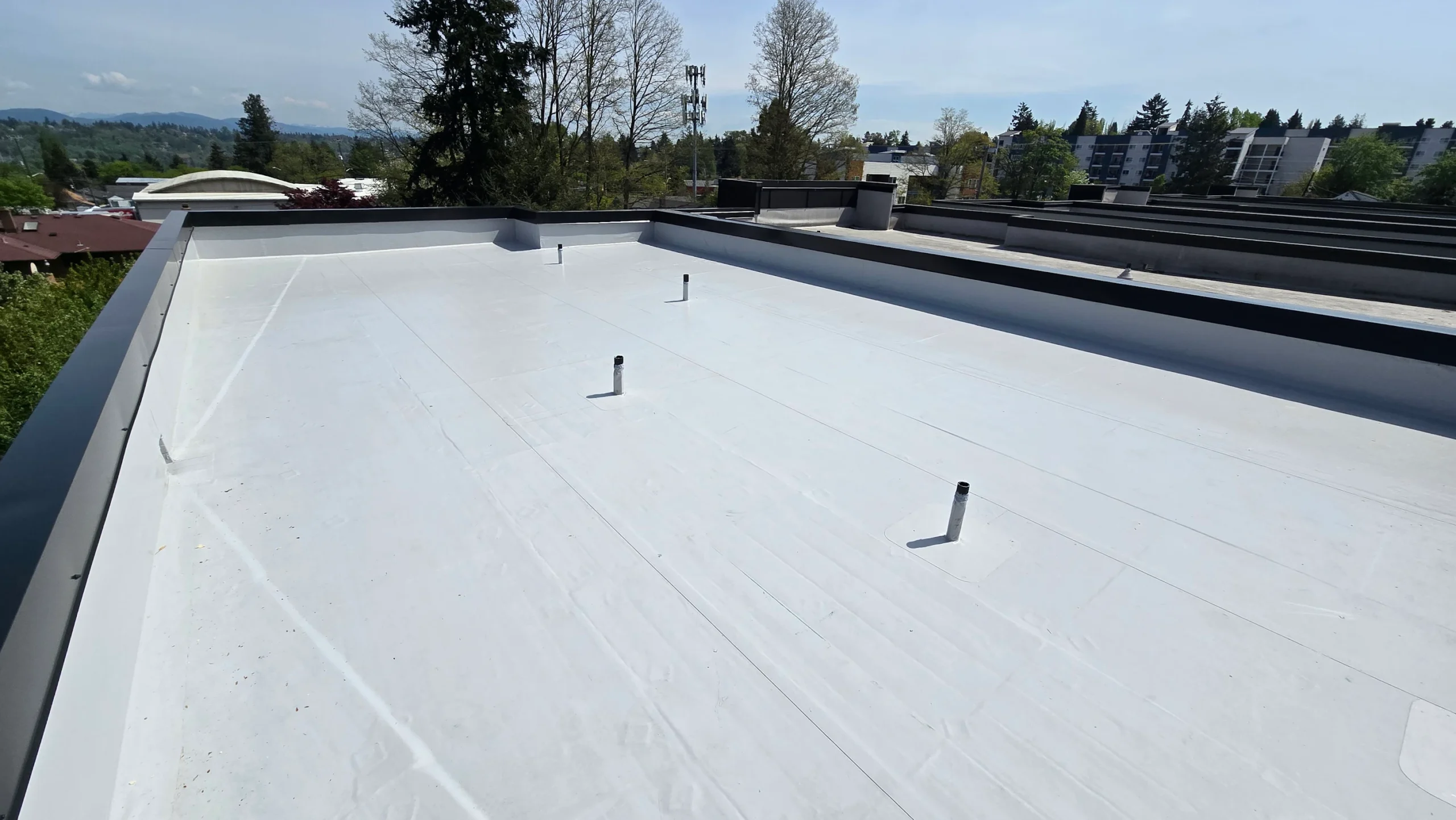
Water that remains on a roof after surrounding areas have drained deserves attention. Persistent ponding can point to blocked drains, inadequate slope, settlement, or a drainage layout that is not working as intended. Property managers should record where water collects and whether the pattern changes after rainfall. Keep accessible drains and outlets free of leaves and loose debris, following safe access procedures. Do not attempt to change roof slope or drainage components without professional direction. An inspection can determine whether the issue is routine maintenance, a localized correction, or a broader condition that needs evaluation.
2. Membrane seams
Membrane seams connect sections of the roofing system and deserve regular attention. Heat-welded seams, adhesive connections, and other system-specific details can be affected by age, movement, installation conditions, and exposure. A seam that appears lifted, separated, wrinkled, or changed should be documented and assessed rather than covered with an improvised patch. TPO, PVC, and Duro-Last systems have different product requirements and repair procedures. A method suitable for one membrane may not be appropriate for another. Identify the existing system where possible and provide that information when arranging service.
3. Flashing and roof transitions
Flashing protects locations where a roof meets another building element, including parapet walls, roof edges, curbs, expansion joints, and changes in elevation. These details experience movement and weather exposure that can differ from the open roof field. Loose, split, displaced, or deteriorated flashing can create an entry point that is difficult to trace from inside. Interior staining near an exterior wall does not necessarily identify the source because water can travel before it becomes visible. A qualified roofer can assess the exterior detail and determine whether repair or replacement is appropriate.
4. Penetrations and rooftop equipment
Commercial roofs often contain HVAC equipment, vents, conduits, pipes, supports, and other penetrations. Each opening interrupts the roof surface and requires compatible flashing or a manufacturer-approved detail. Equipment service can also bring foot traffic, tools, and materials onto the roof. Coordinate access with maintenance vendors and remind them that the membrane must be protected. After major equipment work, consider checking the surrounding roof area for displaced flashing, punctures, loose fasteners, abandoned materials, or changes in the membrane.
5. Surface damage and wear
A roof surface can be damaged by dropped tools, sharp debris, unprotected equipment work, or repeated foot traffic. Other warning signs may include unusual abrasion, cracking, blistering, exposed reinforcement, or areas that differ from adjacent material. The significance depends on the membrane type, age, and whether the waterproofing layer has been compromised. Photograph changes from a safe position, record the date, and note whether the area is near equipment or a service route. Avoid walking across suspect areas or applying temporary products without professional direction.
6. Interior warning signs
Ceiling stains, damp insulation, musty odors, peeling finishes, and recurring water entry can signal a roof issue, although plumbing, condensation, walls, and mechanical systems can produce similar symptoms. Record the affected rooms, dates, weather conditions, and any changes after previous repairs. Protect occupants and building contents, and follow property procedures for immediate hazards. Coordinate a roofing inspection with any necessary investigation of plumbing or mechanical sources. The most effective repair addresses the entry point and underlying condition rather than repeatedly treating interior finishes.
7. Roof access and records
Leaves, branches, discarded packaging, construction debris, and materials left by other trades can obstruct drainage or damage a membrane. Uncontrolled access increases the chance of punctures and makes it harder to know what changed between inspections. Maintain a record of inspections, repairs, equipment work, reported leaks, and photographs. Note the roof system and approximate installation history if known, along with warranty information. Records make it easier to compare conditions over time, prioritize maintenance budgets, and give a roofing professional useful context.
Inspection schedules and repair decisions
Inspection frequency should reflect the roof’s age, condition, system, building use, nearby trees, rooftop equipment, and manufacturer recommendations. Many property managers arrange periodic professional inspections and additional checks after severe weather or work involving roof access. A useful report identifies the date, conditions, areas reviewed, photographs, and recommended next steps. A visible issue does not automatically mean the entire roof needs replacement. Consider the distribution of defects, moisture within the assembly, previous repairs, drainage, insulation, and expected remaining service life before deciding between localized repair and replacement.
For a property in the Tacoma area, this check should be considered in context rather than as a stand-alone rule. Building layout, exposure, existing materials, and the condition of connected components all affect the right next step. Document visible conditions, ask the contractor to explain the cause, and request a written recommendation that distinguishes immediate work from longer-term maintenance.
Working with Roofing Solutions NW
At Roofing Solutions NW our process begins with consultation and inspection, continues with planning and a detailed estimate, and proceeds to professional installation. When requesting an estimate, share the building location, approximate age of the existing system if known, previous repairs, and any recurring water concerns. Ask which materials and installation details are proposed, what the scope includes, and how concealed conditions will be handled. Review the Roofing Solutions NW Flat roofing page and the roof repair and maintenance page for service details and contact information.
Frequently asked questions
What is the most important factor in long-term performance?
The complete system matters: suitable materials, sound substrate, correct drainage, carefully detailed transitions, and installation that follows manufacturer requirements.
Can a localized issue be repaired without replacing the entire system?
Sometimes. The answer depends on the extent and distribution of defects, condition of surrounding materials, moisture within the assembly, and whether a compatible repair can restore performance.
What should be included in a written estimate?
The estimate should identify the product or system, preparation, installation details, areas included, exclusions, disposal, warranty information, and how concealed damage or additional work will be approved.
How often should the system be inspected?
Frequency depends on age, exposure, debris, building use, manufacturer guidance, and previous problems. Ask a qualified contractor to recommend a schedule for the specific property.